You Won’t Believe What I Found in Fukuoka’s Backstreets
Fukuoka isn’t just about ramen and crowds at Yatai stalls—there’s a whole other side hiding in plain sight. I stumbled upon flavors so authentic, so deeply local, they don’t even make it onto tourist maps. From tiny alleyway kitchens to market vendors who’ve been perfecting their craft for decades, this city serves up secrets with every bite. If you're chasing real taste over Instagram fame, stick around—what I discovered will change how you see Japanese cuisine forever.
The Real Flavor of Fukuoka Starts Off the Radar
While most visitors flock to the neon-lit alleys of Nakasu or the riverside Yatai stalls for a bowl of tonkotsu ramen, the soul of Fukuoka’s food culture often lies beyond those well-trodden paths. True culinary discovery begins where guidebooks end—down narrow lanes between apartment buildings, behind unmarked wooden doors, or beneath faded plastic curtains flapping in the breeze. These are not places designed for tourism; they are part of the daily rhythm of life for locals who value consistency, quality, and quiet tradition over spectacle.
What defines these hidden kitchens is not their decor, which is often minimal or worn with time, but their devotion to craft. Many have no English signage, no online presence, and only accept cash. Some operate just a few hours each evening, catering to neighborhood regulars who arrive like clockwork after work. The absence of digital footprints is not a flaw—it is a feature. It means the focus remains on the food, not on branding or visibility. In these spaces, authenticity isn’t marketed; it’s lived.
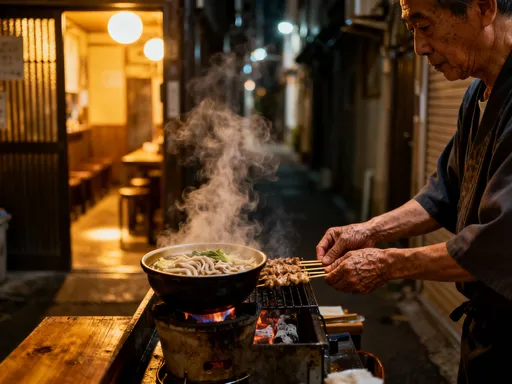
One such place I found was tucked behind a laundromat in the Tenjin district, accessible only by a dimly lit passage barely wide enough for two people. Inside, a counter with six stools faced an open kitchen where an elderly chef worked in near silence, pulling noodles by hand and ladling broth with precise movements. There was no menu—only a nod toward the steaming bowls in front of seated guests. When I pointed to one, the chef responded with a slight smile and began preparing my meal. This kind of unspoken understanding is common in Fukuoka’s backstreet eateries, where trust is built through repetition and respect.
These spots thrive because they serve a purpose beyond novelty. They are community anchors, places where generations return for the same comforting flavors. For travelers willing to step off the main streets, the reward is not just a meal, but a glimpse into the quiet, enduring heart of Japanese culinary life—one that values subtlety, seasonality, and the dignity of craftsmanship over flash and fanfare.
Why Local Markets Hold the City’s Best-Kept Secrets
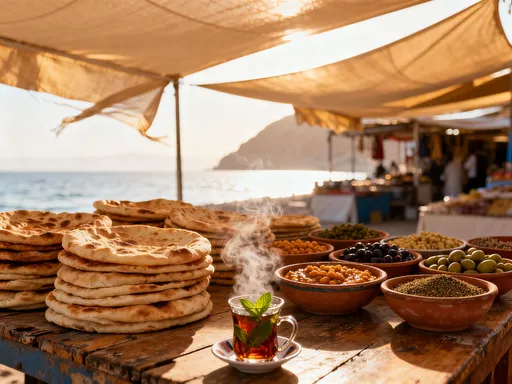
If backstreet restaurants are the heartbeat of Fukuoka’s food scene, then its markets are the arteries—pulsing with fresh ingredients, daily rituals, and generational knowledge. Among them, Yanagibashi Market stands out as a hub where both professional chefs and home cooks gather before dawn. But equally revealing are the smaller, neighborhood markets scattered across wards like Hakata and Momochi, where fishmongers lay out glistening mackerel, octopus, and sea urchin still clinging to their shells, and elderly women bargain gently for daikon and shiso leaves.
What makes these markets special is not just the quality of the produce, but the deep connection between vendor and community. Many stalls have been run by the same families for decades, sometimes over half a century. Recipes are passed down like heirlooms, and the way a vendor selects fish or seasons a pickle reflects years of refinement. At one stall in Yanagibashi, I watched a third-generation fishmonger prepare mentaiko—spicy cod roe—a regional specialty that Fukuoka has elevated to an art form. He explained, through gestures and broken English, how the roe must be cured just right: not too salty, with a hint of chili and yuzu for brightness. When he handed me a small sample on a cracker, the flavor burst—briny, fiery, yet balanced—a taste impossible to replicate outside this coastal city.
Markets also offer unexpected gateways to full meals. A simple grilled scallop from a morning vendor might lead to an invitation to a nearby kitchen where the owner’s wife is steaming dumplings for lunch. These moments are unplanned and unscripted, born from the natural flow of market life. I once followed a local woman who bought a bundle of fresh bamboo shoots and asked if I’d like to see how they’re used. She led me to a tiny eatery around the corner, where the chef was slicing them paper-thin for a springtime noodle dish. Within minutes, I was seated, watching steam rise from a bowl of delicate udon in a clear broth, topped with earthy bamboo and a single poached egg. No menu, no prices listed—just food made with care and shared without pretense.
For travelers, visiting these markets early in the morning offers more than just culinary insight—it provides a window into the values that shape Fukuoka’s cuisine: freshness, seasonality, and humility. The best ingredients don’t need elaborate presentation. They speak for themselves when treated with respect. And while supermarkets and convenience stores cater to efficiency, the markets remain committed to quality and connection, preserving a way of life that is increasingly rare in modern cities.
Beyond Ramen: Underrated Dishes Only Locals Order
Fukuoka’s global fame rests largely on its rich, milky tonkotsu ramen—a dish so iconic it draws pilgrims from around the world. Yet to limit the city’s cuisine to ramen is to miss a rich tapestry of regional specialties that define everyday eating for locals. Dishes like motsunabe, karashi renkon, and hakata mizutaki may not dominate social media feeds, but they carry the soul of Kyushu’s culinary identity, shaped by history, climate, and a culture of resourcefulness.
Motsunabe, a hotpot made with beef or pork offal, is a winter staple in Fukuoka homes and izakayas alike. It begins with a sizzling base of garlic, leeks, and chili, into which cleaned intestines are added and simmered slowly until tender. What sets it apart is the final step: after the meat is eaten, the remaining broth is used to cook chijimi, a type of Korean-style pancake, or rice, transforming leftovers into a deeply flavorful second course. This practice of maximizing flavor from humble ingredients reflects a broader Japanese ethos of waste-free cooking. While some travelers might hesitate at the idea of offal, the dish’s popularity among locals—especially office workers seeking hearty, warming meals—speaks to its satisfying depth and communal nature.
Another lesser-known treasure is karashi renkon, a specialty of the nearby Dazaifu area. Lotus root is stuffed with spicy Japanese mustard, sliced into rounds, coated in tempura batter, and deep-fried until golden. The contrast between the crisp exterior and the peppery kick inside is both surprising and addictive. Originally created as a temple offering, it later became a beloved snack sold at roadside stands and train stations. Its preparation has changed little over the years, with many vendors using family recipes that have been refined across generations. Unlike mass-produced souvenirs, these versions are made in small batches, ensuring texture and heat are perfectly balanced.
Hakata mizutaki, a chicken hotpot simmered in a light dashi broth with vegetables and tofu, represents a more delicate side of Fukuoka’s cuisine. Unlike the bold flavors of ramen or motsunabe, mizutaki emphasizes purity and subtlety. The broth is sipped directly from a cup before the meal begins, appreciated for its clean, umami-rich taste. Once the chicken and vegetables are cooked, the remaining broth is often used to make a rice porridge called zosui, completing the meal with quiet elegance. It’s a dish best enjoyed in a low-lit, wood-paneled restaurant where conversation flows softly between sips and bites—a reminder that not all great food needs to be loud or flashy.
Exploring these dishes requires moving beyond the most visible food trails. But for those willing to ask locals or observe what’s on neighboring tables, the reward is a deeper understanding of Fukuoka not as a destination, but as a living food culture shaped by generations of care, memory, and seasonal rhythm.
How to Find Hidden Eateries Without a Guidebook
In a city where the best restaurants often have no website, no social media, and no English menu, finding authentic food becomes less about research and more about observation. Guidebooks and apps can point to popular spots, but the truly memorable meals are usually discovered through subtle cues—clues that require patience, presence, and a willingness to wander without a fixed plan.
One of the most reliable indicators is the presence of local salarymen lining up outside a narrow doorway, briefcases in hand, just after 6 p.m. These are not tourists—they are regulars returning to a place that has earned their loyalty through consistency and flavor. Another sign is the absence of flashy signage. The most respected kitchens often have only a small lantern or a handwritten placard indicating the name and hours. If the door is slightly ajar and you catch the scent of grilling meat or simmering broth, that’s usually permission enough to step inside.
Cash-only policies are another telltale marker. While most urban eateries in Japan now accept cards, many traditional backstreet spots operate on a cash-only basis, not out of resistance to modernity, but because they serve a local clientele who value speed and simplicity. If you see a small sign that reads “Cash Only” in both Japanese and English, consider it a badge of authenticity. Similarly, handwritten menus taped to the counter or chalked on a board suggest a focus on daily specials and seasonal ingredients, rather than a fixed, mass-market offering.
Timing also plays a crucial role. Some of the best-known hidden gems open late—after 8 p.m.—to cater to night workers or those finishing overtime. Others close early, selling out by mid-afternoon. One unforgettable find was a tiny tempura stall in a residential neighborhood that opened only from 5 to 7 p.m., three days a week. The owner, a man in his seventies, used the same oil blend for years, carefully filtering and replenishing it daily to maintain a distinct, nutty aroma. He didn’t advertise—his customers knew when to come.
Behavioral cues matter too. If you see regulars exchanging warm greetings with the chef, or if the owner remembers someone’s usual order without being asked, you’ve likely found a place rooted in community. These interactions aren’t performative; they reflect real relationships built over time. For visitors, entering such a space requires humility—being willing to sit quietly, observe, and follow the unspoken rules. Pointing at what someone else is eating, nodding in appreciation, or simply saying “omakase” (I’ll leave it to you) can open doors more effectively than fluent Japanese.
Ultimately, finding hidden eateries is less about navigation and more about intuition. It’s about slowing down, trusting your senses, and allowing the city to reveal itself not through algorithms, but through the quiet rhythms of daily life.
The Role of Small-Scale Chefs in Preserving Tradition
Behind every unforgettable meal in Fukuoka’s backstreets is a cook who has dedicated their life to a single craft. These are not celebrity chefs with global brands, but artisans—noodle makers, tempura fryers, pickle fermenters—who rise before dawn to prepare food the same way it was made decades ago. Their kitchens may be small, their tools simple, but their influence on the city’s culinary identity is profound.
Take the case of a hakata-style noodle maker in the Jonan district, whose family has produced ramen noodles since the 1950s. Every morning at 4 a.m., he begins the process: mixing flour, kansui (alkaline water), and a precise amount of salt, then kneading the dough by hand until it reaches the perfect elasticity. The sheets are rolled, sliced, and hung to dry—all without automated machinery. He claims the texture cannot be replicated by machines, no matter how advanced. His son now works beside him, learning the feel of the dough, the timing of the cut, the rhythm of the day. This kind of apprenticeship, passed from parent to child, is how tradition survives in the face of industrialization.
Similarly, a tempura vendor in a quiet alley near Ohori Park uses a blend of sesame and rapeseed oil that has been maintained for over thirty years. He filters it daily, adds fresh oil incrementally, and never lets it cool completely. The result is a golden crust with a unique depth of flavor—nutty, clean, with a whisper of history in every bite. When asked why he doesn’t expand, he shrugs and says, “If I open another store, I can’t watch the oil myself. It wouldn’t be the same.” For him, quality is inseparable from personal attention.
These chefs resist the pressure to scale, to franchise, or to cater to trends. Their menus rarely change. They do not chase viral fame or Michelin stars. Instead, they measure success by the number of regulars who return, the consistency of their product, and the knowledge they pass on. In doing so, they preserve not just recipes, but a philosophy: that food should be made with care, eaten with gratitude, and shared with humility.
Their quiet persistence is a counterpoint to the fast-paced, trend-driven food world. They remind us that culinary excellence does not require spectacle—it can be found in the daily repetition of a simple act, done well. For travelers, meeting such individuals transforms a meal into a moment of connection—a brief but meaningful exchange across cultures, grounded in the universal language of taste.
Navigating Language and Culture Without Feeling Out of Place
For many visitors, the idea of entering a tiny, Japanese-only restaurant can be intimidating. Without the ability to read the menu or ask questions, there’s a fear of misunderstanding etiquette or making a misstep. Yet, in my experience, the opposite is true: most small eateries in Fukuoka welcome curious guests, even those with limited language skills. What matters most is not fluency, but respect.
Simple phrases go a long way. Saying “sumimasen” (excuse me) to get the server’s attention, or “arigatou gozaimasu” (thank you) at the end of the meal, signals appreciation. Even pointing at another diner’s plate with a smile and a nod is often enough to place an order. Many owners respond with quiet warmth, offering a small bow or a nod of approval. In one instance, after I pointed to a steaming bowl across the counter, the chef brought me the same dish—and then, noticing I was alone, placed a small side of pickled vegetables on the table, unprompted. No words were exchanged, but the gesture spoke volumes.
Cash also serves as a universal signal. Handing over the correct amount—often displayed near the entrance—shows that you understand the rhythm of the place. Some establishments have a tray near the door where customers place their payment upon entry or exit, eliminating the need for conversation altogether. This system, common in traditional shops and eateries, is not cold or impersonal—it’s efficient, respectful of the cook’s focus, and deeply ingrained in local custom.
It’s also important to understand that silence is not unfriendliness. In many backstreet kitchens, conversation is minimal by design. The chef is concentrating on the food, and the space is meant for eating, not socializing. Sitting quietly, eating slowly, and leaving a clean counter are all forms of respect. You don’t need to perform—just be present.
Children, too, are often welcome, though seating may be limited. A grandmother once smiled at my companion’s young daughter, then reached under the counter and produced a small cup of sweet red bean soup, just for her. These small acts of kindness are not advertised or expected—they emerge naturally in spaces where community and care are central.
The lesson is clear: you don’t need to speak the language to connect through food. You only need to approach with humility, observe with care, and respond with gratitude. In doing so, you become not just a visitor, but a temporary participant in a tradition that values presence over performance.
Turning Discovery into Meaningful Travel
Finding a hidden kitchen in Fukuoka’s backstreets is not just about tasting something new—it’s about engaging with a culture on its own terms. Each meal becomes a small act of respect: for the chef who rises early, for the vendor who tends their stall for decades, for the city that values quiet mastery over loud acclaim. In a world where travel is often reduced to checklists and photo ops, these experiences offer something deeper—a reminder that the most meaningful journeys are not about seeing more, but about seeing differently.
Seeking out authentic food requires slowing down, listening, and trusting your instincts. It means walking past crowded attractions to follow the scent of grilled fish, or waiting patiently as a local orders before you point to the same dish. It means accepting that not every meal will be comfortable or familiar—and that those moments of uncertainty are often where connection begins.
Food, in this sense, becomes a bridge. It allows us to participate in daily life, even briefly, and to honor the people who keep traditions alive. When we choose to eat where locals eat, we vote with our presence for sustainability, authenticity, and human-scale craftsmanship. We support not just an economy, but a way of life.
So the next time you travel, resist the urge to rely solely on rankings or reviews. Instead, let curiosity guide you. Wander without a map. Follow the steam rising from a kitchen window. Smile at the owner, even if you can’t speak their language. Let the city surprise you.
Because the truth is, the best meals are not found—they are discovered. And in that discovery, we don’t just taste a place. We begin to understand it.